The Evolution of Mass Participation Sports
This article is part of our Mass Participation Sports series.
Fitness is no longer a solo act. Across parks, streets, beaches, and city centres, hundreds of millions of people now take part in mass participation sports events worldwide.
Unlike most competitive sports, mass participation events are built for inclusion at scale. They welcome elite athletes and first-timers alike, across ages and genders. Formats range from marathons and triathlons to fun runs, trail races, obstacle courses, and hybrid fitness events.
For organisers, sponsors, and partners, understanding how mass participation sports evolved, and why participation looks the way it does today, provides critical context for what’s changing across the industry now.
Key Takeaways
Mass participation sports have shifted from elite-only races to globally inclusive experiences. Race events now welcome all ages, identities, and ability levels.
Formats have diversified beyond traditional marathon. Trail ultras, obstacle races, hybrid fitness events like HYROX, virtual challenges, and grassroots formats such as Strava’s Burrito League are now getting more attention.
Organisers are now prioritising meaningful design. Popular events now focus on purpose, accessibility, inclusion, experience, and lasting engagement over pure headcount.
In today's social-media-first world, personalised participant content is becoming a must in races for standout participant experience, post-event marketing, reputation building, and revenue.
The Gatekept Era (Early 20th Century–1960s)
For much of the 20th century, participation was not the point.
Endurance events existed, but they were small and exclusive. Marathons and long-distance races were small, male-only, and governed by club rules. Most people weren’t invited, and even fewer considered entering.
These events were athletic contests, not community experiences.
In the US, The Boston Marathon, founded in 1897, began with just 15 male entrants. For decades, it remained a race for elite club runners.
In Europe, early marathons were tied to athletic federations and national championships.
In Japan, races like Lake Biwa catered to top male athletes.
In South Africa, the Comrades Marathon became a revered endurance test, but one shaped by apartheid-era exclusion.
In Australia, events like the Traralgon Marathon (first held in 1968) were considered serious, self-supported tests for amateur athletes.
Across regions, participation was selective, and belonging had to be earned.
Women were also either formally excluded or quietly discouraged. When Bobbi Gibb ran Boston in 1966, she wasn’t allowed to register and ran without a bib. Kathrine Switzer entered in 1967 using only her initials and was nearly pulled off the course mid-race.
Recreational participation didn’t exist yet. There were no fun runs, no charity entries. No one ran “for the experience.” Marathons enforced strict time limits, sometimes under four hours. Events were built to identify the fastest, not to welcome the most.
Participation signalled seriousness, discipline, and national pride.
Things began to shift after World War II when more people saw sports on television. By the late 1960s, public interest in running was rising.
In turn, the "for-fast-athletes" model that had kept people out was becoming harder to maintain. That shift opened the door to everything that came next.
The Competitive Boom (1970s–1980s)
The first true surge in mass participation came in the 1970s and 1980s, led by road running.
Kenneth Cooper’s Aerobics (1968) reframed exercise as medicine. Arthur Lydiard’s coaching philosophies popularised jogging for health. Jim Fixx’s The Complete Book of Running (1977) became a bestseller. Then, Frank Shorter’s 1972 Olympic marathon gold pushed running into the spotlight as something masculine and aspirational.
This era valued competition and personal challenge. Races were still timed, measured, and prized for difficulty. A sub-4-hour marathon was still a badge of honour. The front of the pack still mattered, but at this period, simply finishing was celebrated too. Effort was included in the story along with speed.
Events like the NYC Marathon (1970), London Marathon (1981), and Peachtree Road Race (1970) saw fields balloon into the tens of thousands. In Australia, the City2Surf launched in 1971 and quickly grew into one of the world’s largest fun runs, attracting over 30,000 participants by the late 1970s. In New Zealand, Round the Bays Auckland began in 1972, drawing tens of thousands annually.
Women were newly allowed into major events, such as in the Boston Marathon in 1972. However, participation remained lopsided. Most runners were male, white-collar, and college-educated.
Later on, some races folded under logistical or financial strain. The Polytechnic Marathon (UK), once iconic, faded after the London Marathon’s success. Others were overshadowed or outgrown. Still, the core formats endured — marathons, 10Ks, triathlons, city rides — setting the global blueprint.
By the late 1980s, participation had plateaued. But the legacy was set: running was no longer elite. It was already public.
The Inclusion Wave (1990s–2010s)
By the 1990s and 2000s, mass participation shifted toward inclusion. Events no longer just welcomed runners. They actively recruited first-timers, fundraisers, and anyone willing to finish. The field diversified so fast that women made up over half of U.S. race finishers by 2010.
Participation became the product. Community events like Parkrun (founded 2004 in London) offered free weekly 5Ks across parks worldwide, including Australia. Australia became one of the world’s largest parkrun communities outside the UK.
Major city races expanded globally — from the Mumbai Marathon to Tokyo Marathon to Berlin Marathon to Great Ethiopian Run.
The Melbourne Marathon Festival and Gold Coast Marathon evolved into major platforms for charity running and recreational participation. Fun runs such as Color Runs and Glow Runs, and themed charity events like Wings for Life World Run drew in younger and more diverse crowds.
Globally, new formats added entertainment and purpose. The Rock ‘n’ Roll Marathon series (launched 1998) added music and entertainment to the course. Tough Mudder and Spartan Race pushed obstacle formats. Stadium Stomp offered participants the chance to climb the stairs of major arenas, blending fitness with novelty.
In this era, the culture prized shareability, community, and cause-driven purpose. “Finisher” became a legitimate identity, and the average marathon time slowed. Events extended time limits, added walkers, and emphasized atmosphere.
But by the mid-2010s, novelty fatigue set in. Warrior Dash and Zombie Runs faded fast. Even the Color Run saw steep drop-offs mid-decade. Market saturation and shifting interests signaled a slowdown by 2015.
What had started as a movement now required a reset. Participation had peaked, but expectations had also changed.
The Recalibration Era (2020s)
As growth plateaued in the late 2010s, mass participation entered a recalibration phase. Events shifted from chasing volume to improving quality, resilience, and relevance.
The pandemic accelerated the shift. Races were cancelled globally in 2020. Some never returned. Others, however, adapted.
Some were offering virtual options, staggered starts, and safety protocols. The Boston Marathon went fully virtual for the first time in 2020 in its 123 year-history, and hybrid formats became permanent fixtures.
New formats have also gained ground.
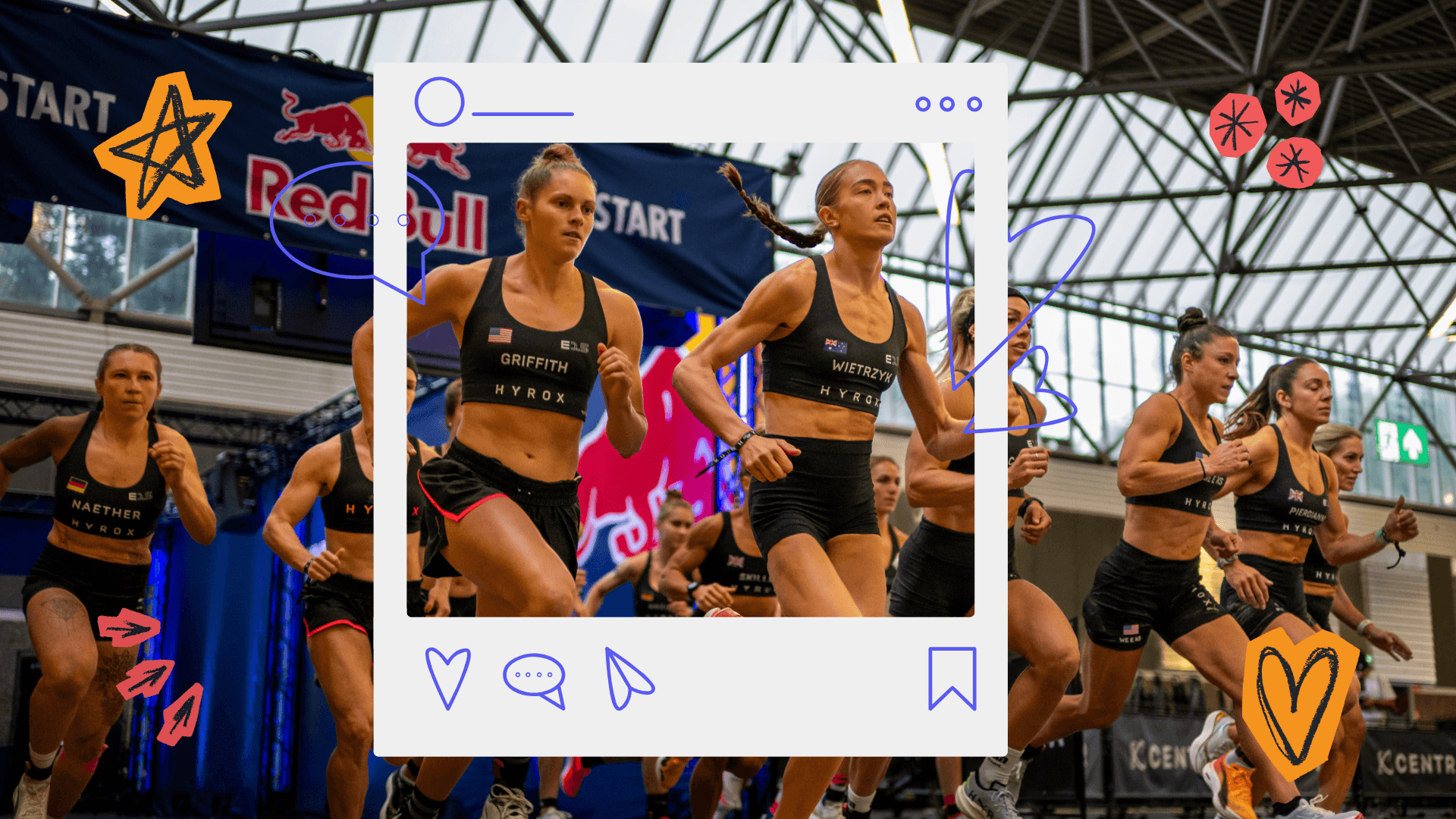
HYROX (launched 2017) blended functional fitness with indoor racing, pulling in gym-goers and former obstacle racers.
Trail ultras and nature-based events saw more interest, as runners are seeking quieter, more meaningful challenges. UTMB grew into a global franchise, with events like Tarawera Ultra in New Zealand and Ultra-Trail Australia.
In this period, other events faded, and others merged. Tough Mudder filed for bankruptcy and was acquired by Spartan. Local 5km runs without strong backing disappeared.
Up to today, big city races still offer virtual editions like the Virtual Tokyo Marathon 2026. Integrating with apps has also become a big thing, improving the experience during and beyond race day. Smartwatches from Garmin, Apple, Coros, and Suunto — paired with platforms like Strava — are now central to training, tracking, and community.
(Related: Gen Z and Women Are Taking Over Mass Participation Sports Events)
Meanwhile, inclusion efforts expanded: more events added non-binary and para-sport categories, and organisers began addressing race, access, and representation more directly.
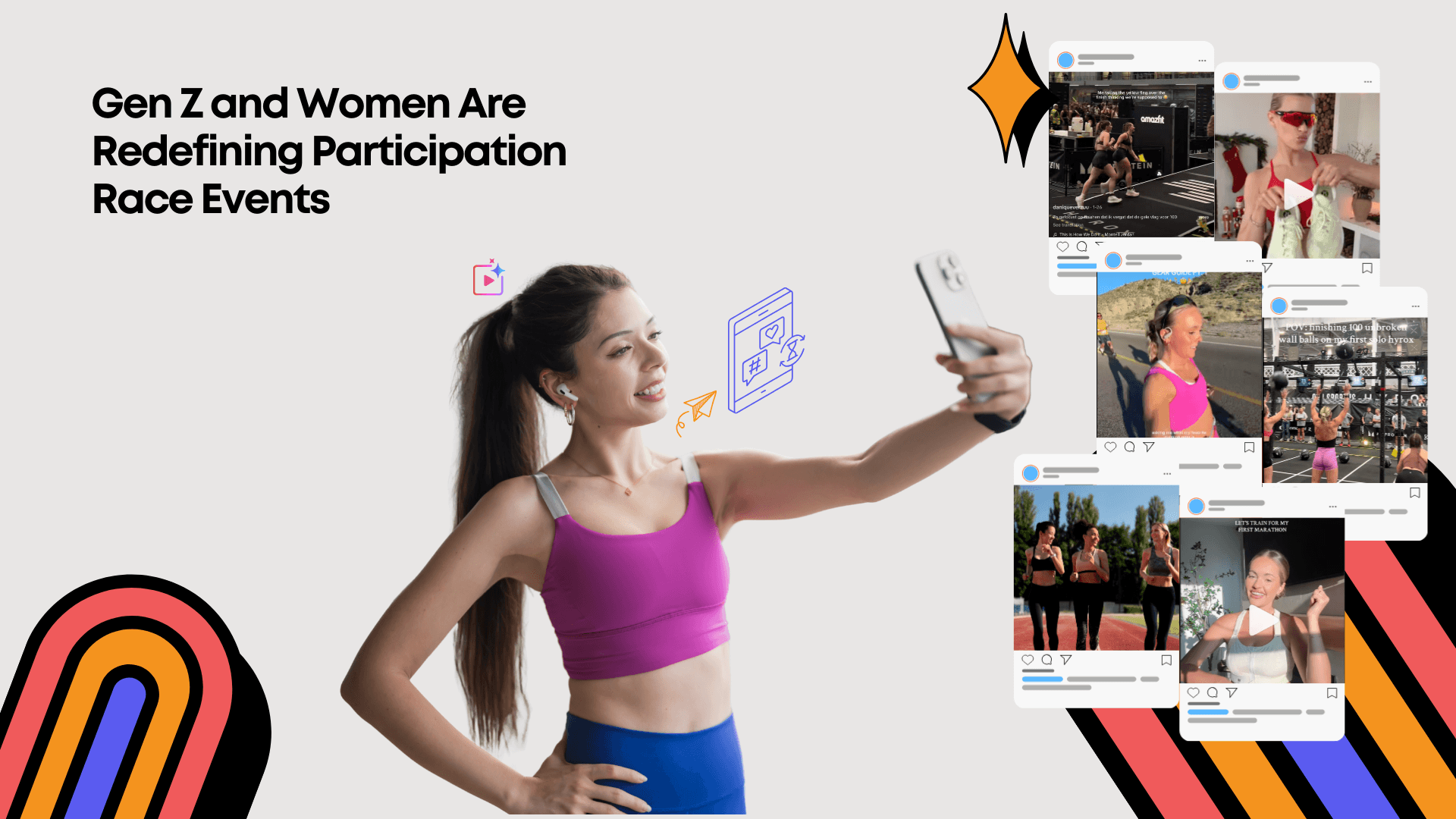
Participation also changed. Older runners stayed loyal, but more younger people, especially Gen Z participants and women, who are mostly digital natives, leaned toward social, flexible formats — from team 5Ks to fitness challenges on social media.
(Related: How Social Media Is Reshaping Mass Participation Sports)
This era is slower, more intentional, and focused on long-term value.
Types of Mass Participation Events Today
City Marathons and Road Races
The traditional foundation. Think Tokyo, Berlin, New York, London. These are timed, measured, and often oversubscribed. They attract everyone from Olympic qualifiers to fundraising first-timers.
Trail and Ultra Races
Remote, scenic, and often brutal. UTMB in Chamonix, Western States in California, and Tarawera in Rotorua combine endurance with natural terrain. Trail racing has surged, particularly across Europe and Oceania.
Obstacle Course Races
Courses built with grit in mind. Spartan Races, including Tough Mudder and Deadly Dozen, feature mud crawls, rope climbs, and team-based challenges. Some are timed; others focus on survival. Spartan scaled with standardised formats and global partnerships. Tough Mudder declined after oversaturation and financial issues.
Hybrid Fitness Races
Arena-based and replicable. HYROX, DEKAFit, Turf Games. These combine gym movements with endurance: rowing, sled pushes, wall balls.
HYROX, described by founder Christian Toetzke as “CrossFit with rules”, was built for scalability and accessibility, not just spectacle. It appeals to gym-goers who want a structured challenge.
Fun and Theme Runs
Participation without pressure. Colour Runs, Santa Dashes, and Glow Runs were cultural gateways. T-shirts and playlists replaced rankings. Many first-timers came through these events, and stayed in the ecosystem.
Virtual and Hybrid Events
Track anywhere. Strava-hosted challenges, Road to the Majors, and charity apps like Charity Miles keep participation flexible. Many emerged during lockdowns but have since become permanent.
Charity and Fundraisers
Typically large-scale, inclusive, often untimed events driven by cause-based participation.
One example is the Podium Sports’ community run in the Philippines where they raised funds to support local sports facilities for children. Other examples include Walk to End Alzheimer’s, Relay for Life, and thousands of local walks and runs draw people who never enter timed races.
These formats expand inclusion as many participants are first-timers or non-athletes.
Community-Driven and Micro-Challenges
Grassroots, gamified formats that blend movement with fun rules and social incentives. Often small and playful, these events are expanding what participation can look like, especially for younger, community-oriented athletes.
The clearest example? Strava’s Burrito League. Each Burrito League city designates a short Strava segment, usually a few hundred metres, for free burritos (a full year's worth!).
Key Stats: 2025–2026
Recent numbers suggest the participant growth in mass participation sports events is not a passing moment.
The Mass Participation Pulse Report 2026 by Massive shows more people planning to keep entering events than at any point in recent years, with many intending to do more.
89% of participants plan to maintain or increase event participation
37% intend to enter more events year-on-year
In Sydney alone, the TCS Sydney Marathon received more than 123,000 applications for its August 2026 race. In London, more than 1.1 million people applied for the 2026 marathon.
HYROX continues to grow at an explosive pace, expanding its calendar across continents to keep up with demand. We’ve recently seen this in HYROX Brisbane, where they had to add an extra race day (making it 5 days!) to accommodate demand for the 2026 edition. This after general sale tickets sell out in under 30 minutes, with some categories gone within just 1–3 minutes of release.
Meanwhile, IRONMAN 2026 events sold out more than a year in advance.
Recent data indicates that expectations around value and experience are increasing, with perceived value for money dropping to 36%.
TL;DR
Demand continues to outpace supply
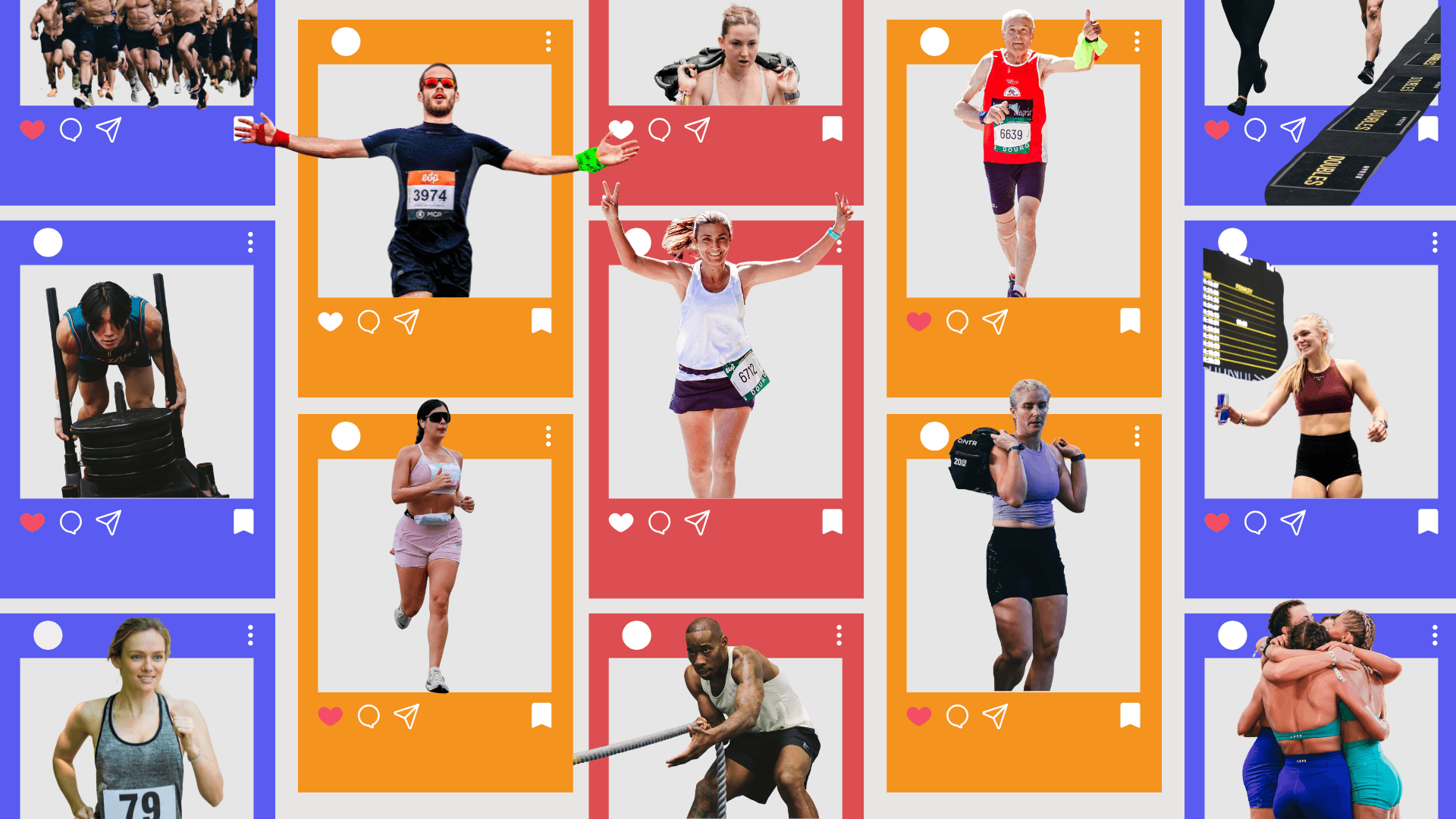
Participation is widening across all demographics
Expectations around experience and recognition are rising
The next phase won’t be defined by more start lines. It will be shaped by how participation is designed, delivered, and remembered.
Read next: How Social Media Is Reshaping Mass Participation Sports
Why Personalisation Now Matters
The evolution of mass participation sports shows one clear trajectory: from elite contests to inclusive, purpose-driven experiences. Today’s participants aren’t just chasing medals. They are now seeking meaning, memories, and moments worth sharing.
That’s where personalisation comes in.
From custom bibs and tailored playlists to personalised finisher videos, participants expect more than just a finish line. They want to feel seen, celebrated, and connected.
Start Offering Personalised Race Videos
At CrowdClip, we extend the value of race moments beyond the race day with personalised race videos.
Whether it’s a community run, a major marathon, or a fast-growing HYROX race, we help turn participants' content into powerful marketing assets and revenue drivers for organisers and sponsors.
Want to leverage participant content?
Let’s talk about how CrowdClip can elevate your next event.
Talk to our Experts
FAQ
When did mass participation sports become popular?
What are the most popular mass participation events worldwide?
What are some examples of less popular but underrated mass participation sports events?
What is the future of mass participation sports?
What do 2026 trends show about mass participation race events?
Last updated: Feb 20, 2026
ABOUT THE AUTHOR

Senior Content Writer
Alicia is a long time event lover - from connecting community to sharing and delivering content. Early in her career she coordinated events, including fundraising events and corporate functions. Today she leads the marketing function at CrowdClip and is enthusiastic about the ways AI can help event marketers.